From Scheduled Broadcast to the On-Demand Queue
From scheduled broadcast to on-demand queue: see how viewing routines shifted from shared appointment times to personal choices made across the day.
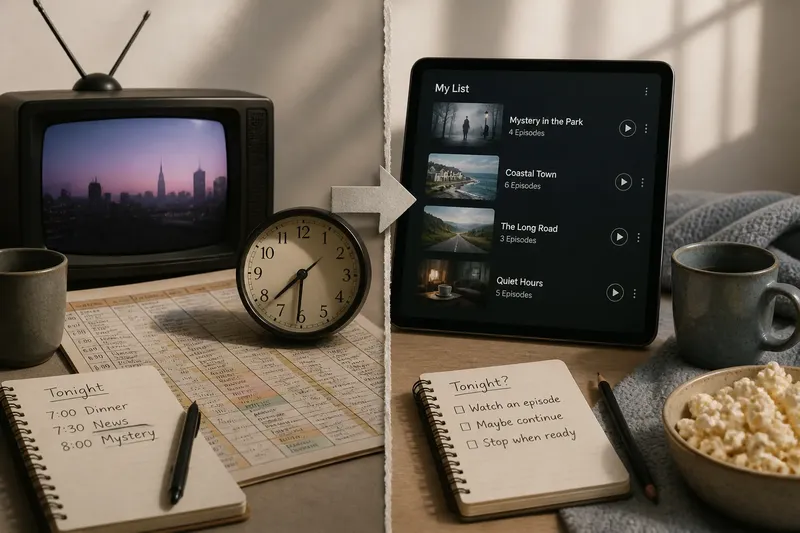
At seven-thirty, someone in the kitchen glances at the clock, calls down the hall, and starts the television before the opening music has passed. That small ritual captures scheduled broadcasting: a programme arrived at a particular time, and viewers arranged part of the day around it. The move from scheduled broadcast to on-demand queue changed not only how people selected a show, but when choosing became part of watching.
The clock set the routine
In a broadcast schedule, the channel supplied the order and the hour. A viewer might know that a familiar programme followed the evening news, or that a weekly drama came on after dinner. The practical decision was often less “What do I feel like watching?” than “Can I be there when it starts?”
That arrangement made time a kind of programme guide. A missed start could mean arriving midway through a story; a missed episode might leave a gap until a repeat or later broadcast. Viewers could switch channels, but their alternatives were also running on someone else’s timetable. The schedule narrowed choice while making the next viewing moment easy to anticipate.
Households built small habits around those fixed slots: finishing a meal before a favourite show, settling into a particular chair, or negotiating which channel would get the television. These routines were social as much as personal. Even when people watched separately, they could share the same reference point the next day: last night’s episode.
Choice moved into the day
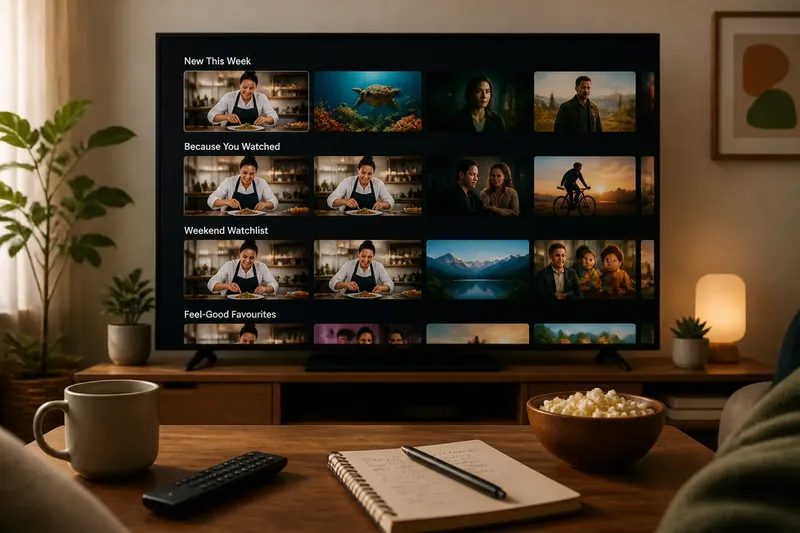
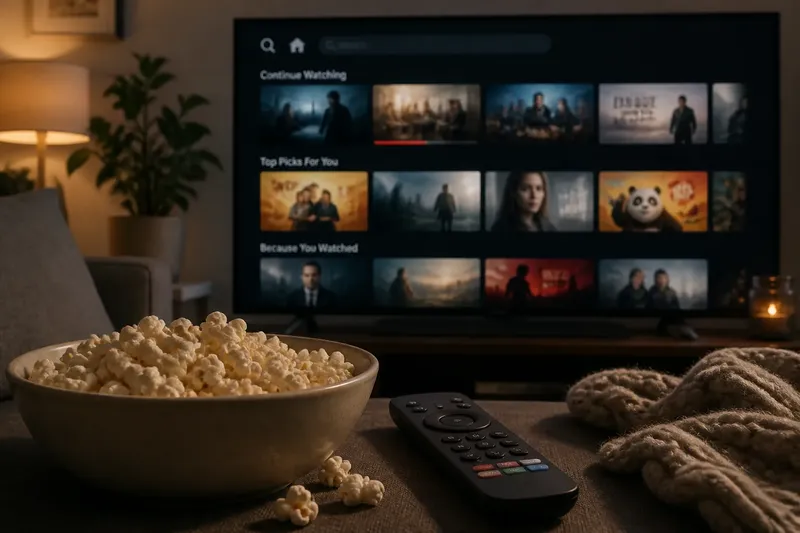
On-demand viewing loosened that appointment. A programme could be selected after work, during a quiet morning, or in the middle of a longer stretch of leisure. The viewer no longer had to begin at the broadcaster’s chosen hour, and a queue could hold several possible next choices instead of one upcoming slot.
That freedom also moved work onto the viewer. Rather than waiting for a programme to arrive, someone had to decide what to start, whether to continue, and when to stop. A queue may look like a schedule, but it is assembled from personal choices, platform suggestions, and whatever remains unfinished. Its order can change with a mood or a passing recommendation.
The shift was gradual rather than a clean handoff. Broadcast channels and on-demand services can sit side by side, and a person may still watch a live event at its scheduled time while saving a series for later. The important change is that viewing time became more adjustable, not that the clock vanished from television.
A week without an appointment
Consider an invented situation: Maya usually watched a weekly mystery when it aired, but her evening commitments became unpredictable. She begins saving the available episodes in a queue, then chooses one on a quieter night and stops when she wants to go to bed. The observable change is not simply more choice; her viewing no longer depends on protecting one particular hour.
Over a realistic week, that shift might feel like this:
- Early in the week: Maya notices the show is available and adds it to a short queue, rather than planning her evening around its broadcast time.
- On a busy night: She skips viewing without losing the chance to catch the next episode at its original start.
- On a quieter evening: She chooses the mystery from the queue, instead of scanning a live schedule for something already beginning.
- After an episode: She decides whether to continue, switch to something else, or leave the remaining episodes for another day.
- At the week’s end: She can still talk about the story with a friend, though they may have watched it on different evenings.
The queue changes the shape of planning. A broadcast routine often began with a known time and fitted other activities around it. An on-demand routine may begin with a spare moment, then make a programme choice within that opening. This can make a short viewing window useful, but it can also turn the act of selecting into a recurring little task.
How did viewing change?
Why did the broadcast schedule matter?
A fixed schedule gave viewers a shared sequence and a clear start time. It also limited flexibility: missing the slot could mean waiting for another airing or accepting that part of the programme was missed.
What does an on-demand queue change?
A queue lets a viewer keep possible programmes in view and choose among them later. It separates access from the original broadcast hour, while leaving the selection and stopping decisions with the viewer.
Do scheduled broadcasts still shape viewing?
Yes: live events, premieres, and channel programming can still create appointment viewing. Many people combine those moments with saved episodes and other programmes they choose on their own time.
Why can choosing feel like another task?
Without a single programme arriving at a set hour, a viewer may need to compare titles, remember what was started, and decide what fits the available time. Keeping a small, intentional queue can make that choice simpler than treating every option as a candidate.
What the queue cannot settle
A queue can preserve intentions, but it cannot decide how much attention a programme deserves or whether tonight is a good time to watch. A saved title may sit untouched because plans change, interest fades, or another person using the profile adds something ahead of it. That is not a failure of the queue; it is evidence that viewing habits are flexible rather than fixed.
It is also easy to confuse availability with obligation. A broadcast schedule made a programme feel urgent because its start time was approaching. On-demand access removes that deadline, yet interfaces can still make unfinished episodes conspicuous. A viewer can treat the list as a set of options, not a backlog that must be cleared.
What is not worth the effort is maintaining an elaborate queue as if every title were a commitment. A brief note or a few saved choices can be enough; sorting every possibility into a perfect order merely recreates a schedule without its useful certainty.
Keeping a personal rhythm
To understand the shift from scheduled broadcast to on-demand queue, notice where the decision sits. In the broadcast routine, the programme’s hour often came first and the viewer’s plans adjusted around it. In the queue routine, spare time, household rhythms, and personal preference tend to come first, with the programme selected to fit.
That change can make viewing more accommodating, but it can also make it less shared in time. Friends may follow the same series at different paces; family members may take turns choosing from one queue. A useful routine can be as simple as deciding whether a night is for a live programme, a saved episode, or no television at all.
The schedule once answered “What is on now?” The queue answers a different question: “What might fit now, and do I want to begin?” Keeping that distinction in mind helps viewers make room for spontaneous choice without mistaking every available programme for a plan.